Skip to content
  • Products
    • Locaudit.ai
    • PLANO.AI
    • SCREENO
    • INFLUNS
    • Locearn
    • LOCAUDlT.ai Al-powered OOH monitoring & proof of posting
    • Plano.ai Data driven OOH media planning platform
    • Locearn Rider-based OOH verification network
    • Screeno Programmatic DOOH platform & CMS
    • Influns Influencer & social campaign management
    • Mobile Ads Hyperlocal mobile advertising across channels
  • Services
    • Premium Programmatic DOOH Networks
    • Transit & mobility media
    • Innovative IP & Media Solutions
    • Airline Media
    • BTL (Below the line)
    • MOBILE ADS
    • Transit & Mobility Media Reach audiences across transit, roadside, and mobility touchpoints.
    • Premium Programmatic DOOH Networks Activate high-impact digital screens in premium locations.
    • Airline Media Engage travellers across airports, lounges, aircraft, and in-flight touchpoints.
    • Creator & Influencer Networks Build reach through creators, communities, and social amplification.
    • Innovative IP & Media Solutions Create standout brand experiences through proprietary media formats.
    • Mobile Ads Create standout brand experiences through proprietary media formats.
  • Company
    • ABOUT US
    • OUR TEAM
    • Our Team
    • About Us
    • Careers
  • Resources
    • Blogs
    • Blogs
ChatGPT Image Jun 15, 2026, 01_18_50 PM 1

jatin

  • Home
  • jatin
ooh

The End of ‘Ghost’ Billboards: Why LOCAUDIT AI is the World’s Smartest Site Auditor for OOH and Beyond

April 29, 2026 jatin No comments yet

CONTACT SYSTEM ADMINISTRATOR: CONTACT@LOCAD.NETDEPLOYMENT STATUS: ACTIVEDATA REFRESH RATE: REAL-TIME SYSTEM OVERVIEW: LOCAUDIT AI V.4.0 Core Function: Automated Verification and Real-Time Monitoring.Primary Objective: Elimination of 'Ghost' Billboards and Manual Reporting Latency.Technology Stack: Computer Vision, Machine Learning, GPS Geo-fencing, Neural Image Processing. LOCAUDIT AI serves as the primary intelligence layer for OOH inventory management. The system architecture transitions traditional, high-error manual reporting into a centralized, AI-verified transparency engine. CURRENT OPERATIONS METRICS Total AI-Verified Audits: 15,000,000+ Geo-Tagged Sites Validated: 300,000+ Active Brand Campaigns: 10,500+ Geographic Reach: 9,000+ Towns and Cities. Processing Latency: < 2.0 Seconds per image. MODULE 01: ELIMINATION OF 'GHOST' BILLBOARD PHENOMENA The "Ghost" billboard is defined as a media asset recorded as active in billing systems but non-functional or non-existent in physical space. LOCAUDIT AI terminates this discrepancy through redundant verification protocols. 1.1 DETECTION PARAMETERS Creative Inconsistency: Identification of outdated or incorrect brand assets. Structural Damage: Detection of torn flex, frame misalignment, or collapsed support. Illumination Failure: Night-time auditing via low-light image processing to verify functional lighting. Obstruction Analysis: Identification of foliage growth, new construction, or unauthorized banners blocking visibility. 1.2 PROOF OF POSTING (POP) PROTOCOLS Manual proof of posting is deprecated. The LOCAUDIT AI mobile interface enforces: Mandatory Geo-Tagging: Image capture restricted to a 5-meter radius of registered site coordinates. Temporal Verification: Unalterable timestamps synced to global atomic clocks. Anti-Spoofing: System rejection of gallery uploads or screen-on-screen captures. MODULE 02: LOCAUDIT PRO – CROSS-SECTOR SITE AUDITING While optimized for billboard advertising, the LOCAUDIT Pro architecture extends to Manufacturing, Logistics, and Retail. The system transitions from a media monitoring tool to a universal physical asset auditor. 2.1 RETAIL & SHOPSIGN MONITORING Planogram Compliance: AI verification of product placement on shelves. Signage Integrity: Monitoring of dealer-gate branding across national networks. Deployment Count: Real-time tracking of POP (Point of Purchase) material installation. 2.2 WAREHOUSING & LOGISTICS AUDITS Inventory Visibility: Automated counting of palletized goods via visual sensors. Safety Compliance: Detection of personnel without PPE or blocked emergency exits. Facility Maintenance: Periodic automated checks for structural leaks or equipment misplacement. 2.3 STATUS INDICATORS: SITE AUDIT PIPELINE Site ID #9822: [VERIFIED] – Signage Intact. Site ID #4410: [FLAGGED] – Obstruction Detected (Tree Growth). Site ID #2291: [LOADING…] – Syncing Field Data. MODULE 03: TRANSIT MEDIA & DYNAMIC ASSETS Transit media presents unique auditing challenges due to high-velocity movement and decentralized storage. LOCAUDIT AI standardizes the verification of mobile assets. 3.1 VEHICLE WRAP VERIFICATION Asset: Cabs, Metros, Buses, Auto-rickshaws. Verification Metric: Wrappage integrity and cleanliness. Tracking: Integration with GPS logs to correlate physical location with ad-display uptime. 3.2 AUDIT FREQUENCY Daily: Structural check via driver-app upload. Weekly: Comprehensive AI assessment for wear and tear. Campaign Conclusion: Final audit for removal verification. MODULE 04: TECHNICAL SPECIFICATIONS & ARTIFICIAL INTELLIGENCE The underlying Artificial Intelligence utilizes deep learning models trained on 15 million+ OOH-specific images to distinguish between environmental noise and actual site issues. 4.1 IMAGE RECOGNITION NEURAL NETWORK Model Type: Convolutional Neural Network (CNN). Feature Extraction: Edge detection (for frames), Color Histogram (for creative matching), OCR (for text verification). Confidence Threshold: 98.5% for standard display formats. 4.2 ANALYTICS AND MAPPING INTEGRATION Data streams from LOCAUDIT AI populate the LOCAD Analytics and Map Dashboard. Heatmaps: Visualizing audit failure clusters. Efficiency Scores: Ranking media owners based on maintenance response times. ROI Optimization: Real-time budget reallocation from underperforming/damaged sites to high-integrity assets. MODULE 05: THE SHIFT TO TRANSPARENCY The transition from "Trust-Based" reporting to "Evidence-Based" auditing directly impacts the bottom line for advertisers and media owners. 5.1 FINANCIAL IMPACT (ROI) Waste Reduction: Average 12-18% recovery of "lost" media spend due to ghost sites. Maintenance Speed: 40% reduction in time-to-repair for damaged billboards. Audit Efficiency: 95% reduction in manual review hours for agency teams. 5.2 KEY PERFORMANCE INDICATORS (KPIs) Validation Rate: Percentage of sites passing AI inspection on first attempt. Uptime %: Calculated duration of "Visible and Correct" ad display. Audit Frequency: Number of unique site visits per campaign cycle. MODULE 06: GLOBAL ADOPTION & CASE STUDIES LOCAUDIT AI is the infrastructure of choice for high-stakes, high-volume deployments. 6.1 POLITICAL CAMPAIGN LOGISTICS Client: BJP Lok Sabha Elections (and 25+ other national/state elections). Requirement: Real-time visibility of campaign assets across 9,000+ towns. Outcome: 100% geo-tagged verification of ground-level branding. 6.2 ENTERPRISE RETAIL DEPLOYMENT Clients: Unilever, Reliance. Scale: Verification of shop-front branding and in-store displays across diverse rural and urban landscapes. Metric: Consistent brand representation across non-standardized media formats. SYSTEM SUMMARY: WHY LOCAUDIT AI? Independence: Third-party verification removed from media owner bias. Scalability: Ability to audit 100,000 sites simultaneously via cloud-based processing. Versatility: Single platform for OOH, Transit, Retail, and Logistics. Actionable Intelligence: Automated alerts (SMS/Email) trigger immediate corrective actions. FOR INTEGRATION SPECIFICATIONS: LOCAD HOMEPAGE END OF REPORT STATUS: [COMPLETED]DATA INTEGRITY: [HIGH]SYSTEM VERSION: 4.0.26 LOCAD Pte Ltd. | Sector 6 Technologies LLPCategory: Adtech / Out-of-Home (OOH) TechnologyFocus: AI-Driven Verification, Media Planning, Site Auditing. Disclaimer: All metrics and data points are based on current system performance as of March 2026. Real-time dashboards may vary based on specific campaign parameters and geographic deployment.

Uncategorized

10 Reasons Your OOH ROI Isn’t Working (And How Real-Time Data Can Fix It)

April 29, 2026 jatin No comments yet

CONTACT SYSTEM ADMINISTRATOR: LOCAD SUPPORT | INITIATE AUDIT REQUEST: LOCAUDIT INTERFACE SYSTEM DIAGNOSTICS: OOH ROI DEFICIT ANALYSIS Status: [Loading… 100%]Current Market State: Data FragmentedPrimary Objective: Identification of ROI Leakage in Out-of-Home Advertising The following report categorizes ten critical failure points in legacy outdoor advertising models. It outlines the integration of real-time data streams via LOCAD’s proprietary technology suite (LOCAUDIT and PLANO) to rectify performance variance. MODULE 1: INVENTORY VERIFICATION & GHOST MEDIA Failure Index 01: Lack of Real-Time Proof of Posting (PoP) Metric: 15-20% Inventory Discrepancy. Data Deficit: Manual reporting cycles (15-30 days) allow for extended periods of unverified downtime. LOCAUDIT Solution: IoT-enabled sensor nodes and AI-driven image recognition. KPI Tracking: Uptime Percentage: [99.2% Target] Verification Latency: < 60 Minutes. Status: Active. Failure Index 02: Site Obsolescence & Structural Decay Metric: Visual Impairment Factor (VIF). Data Deficit: Environmental factors (weather, construction, foliage) degrading visibility without agency notification. PLANO Integration: Dynamic site scoring based on environmental sensors and field-team updates. Status: Operational. MODULE 2: ANALYTICAL BLINDNESS & AUDIENCE FRAGMENTATION Failure Index 03: Static Impression Estimates Metric: Estimated vs. Actual Reach. Data Deficit: Utilization of historical traffic counts (2-3 years old) for current outdoor advertising analytics. Real-Time Fix: Mobile signal triangulation and hyperlocal GPS data. KPI List: Dwell Time (Seconds) Frequency Caps Unique Reach (Device IDs) Failure Index 04: Hyperlocal Targeting Deficit Metric: Ad Relevance Index. Data Deficit: Broad placement without consideration for localized audience movement patterns. PLANO Feature: Heat-mapping and audience propensity scoring. URL Reference: Access Analytics and Mapping MODULE 3: OPERATIONAL INEFFICIENCIES & LOGISTICAL OVERHEAD Failure Index 05: Manual Reporting Latency Status: [Processing…] Metric: Man-Hours per Campaign Audit. Data Deficit: Physical photography and manual spreadsheet entries for compliance reports. LOCAUDIT Optimization: Automated dashboard generation. Elimination of 90% of manual reporting labor. Media INR+ Efficiency: 12% Cost Reduction via operational automation. Failure Index 06: Compliance Non-Uniformity Metric: Contractual Adherence Rate. Data Deficit: Variance in reporting standards across multiple vendors and geographical zones. LOCAD Protocol: Standardized digital audit trails for every inventory unit. Status: Verified. MODULE 4: CREATIVE & ENVIRONMENTAL SYNCHRONIZATION Failure Index 07: Contextual Mismatch Metric: Creative Impact Score. Data Deficit: Content failure due to lighting conditions, transit speeds, or surrounding competitor density. AI Solution: AI-driven visibility analysis determining optimal creative sizing and color contrast per site location. Failure Index 08: Attribution Gap (OOH to Digital) Metric: Conversion Lift. Data Deficit: Inability to link outdoor exposure to mobile/web actions. Hyperlocal Integration: Retargeting users based on proximity to OOH assets during exposure window. System Status: Loading Mobile Sync… [Enabled] MODULE 5: COST RATIO & REVENUE LEAKAGE Failure Index 09: Hidden Operational Costs Metric: Total Cost of Ownership (TCO). Data Deficit: Unaccounted fuel, permit fees, and maintenance overhead inflating ROI metrics. PLANO Financial Module: Centralized cost tracking for media INR+ optimization. Failure Index 10: Static Media Decay Metric: Consumer Fatigue. Data Deficit: Over-exposure to stagnant creative leading to "banner blindness" in physical environments. Dynamic Solution: Programmatic DOOH (pDOOH) triggers based on real-time audience density and weather conditions. DATA STREAM: PRODUCT SPECIFICATIONS [PRODUCT: LOCAUDIT] Core Function: Field Audit & Monitoring. Hardware: IoT Smart Nodes / Smartphone API. Reporting Frequency: Real-time / On-demand. Output: Photographic evidence, geo-stamping, timestamping. ROI Impact: 100% Transparency in Proof of Performance. [PRODUCT: PLANO] Core Function: Inventory Management & Media Planning. Logic Engine: Hyperlocal audience insights. Visualization: Interactive Map Layers. ROI Impact: Optimization of spend toward high-density conversion zones. PERFORMANCE INDICATORS (KPI) SUMMARY TABLE Parameter Legacy Method LOCAD Real-Time Data Impact Factor Audit Speed 14 – 30 Days < 1 Hour High Data Accuracy 75% (Manual) 99.8% (AI/IoT) Critical Transparency Low / Fragmented Centralized Dashboard High Media INR+ Unoptimized Targeted Allocation Moderate Reach Verification Probabilistic Deterministic (Device ID) High SYSTEM LOG: ROI RECOVERY PROTOCOL Step 1: Onboard inventory to PLANO for baseline visualization.Step 2: Deploy LOCAUDIT for real-time monitoring of active campaigns.Step 3: Analyze audience density vs. site visibility to calculate true outdoor advertising analytics.Step 4: Reallocate budget from underperforming "Ghost Media" to high-conversion hyperlocal zones. TECHNICAL GLOSSARY & PARAMETERS Impressions: Total potential views calculated via real-time traffic flux and dwell time analysis. Audits: Verified inspections conducted through the LOCAUDIT mobile interface. Media INR+: The net return on investment calculated after removing operational and logistical waste. Hyperlocal: Geofenced areas within 50-500 meters of an OOH asset used for digital retargeting. STATUS: SYSTEM READY FOR DEPLOYMENT.ACCESS FULL SUITE: WWW.LOCAD.NET DATA ARCHIVE: HISTORICAL VS. PREDICTIVE ROI Historical ROI Modeling:Based on "Opportunity to See" (OTS) metrics derived from government census data. High variance. Low reliability. Manual verification required. Predictive ROI Modeling (LOCAD Engine):Based on real-time mobility patterns, IoT sensor feedback, and AI-verified uptime. Zero-latency reporting. High reliability. Automated verification. LOGISTICAL AUDIT SUMMARY The transition from manual outdoor advertising management to a data-centric, real-time architecture is not an option for 2026; it is a requirement. The elimination of "Ghost Media," the synchronization of OOH with mobile data, and the automation of proof-of-posting are the primary drivers of ROI recovery. Agencies utilizing LOCAUDIT and PLANO report a significant decrease in "dark time" and a measurable increase in client retention due to data transparency. REPORT COMPLETE.TERMINATE SESSION: YES/NO[SYSTEM STANDBY]

Uncategorized

Why Programmatic DOOH Will Change the Way You Allocate Digital Ad Spend

April 29, 2026 jatin No comments yet

SCHEDULED REPORT: THURSDAY, APRIL 02, 2026LOG ID: 04022026-ADM-PROG-DOOHSTATUS: COMPILING MARKET ANALYTICS… [100%] INFRASTRUCTURE OVERVIEW: PROGRAMMATIC ADVERTISING PLATFORM TRANSITION Current State: Static manual procurement. Fixed-term IO (Insertion Orders). Geographic lock-in. Transition State: Automated RTB (Real-Time Bidding). Dynamic inventory access. Audience-centric allocation. Primary Driver: Shift from "buying a screen" to "buying an audience segment." Core Technology: Programmatic DOOH (pDOOH). The structural shift in digital billboard advertising budget allocation relies on the move from static, high-friction manual bookings to high-velocity, low-friction digital interfaces. Traditional OOH utilizes long-term lease structures (LTS). Contrast: Programmatic DOOH utilizes impression-based bidding via a programmatic advertising platform. DATA STREAM 01: REAL-TIME BUDGET FLEXIBILITY METRICS Parameter: Budget Fluidity. Metric: Intraday reallocation capability. Status: Operational. In traditional OOH, capital is committed 4–12 weeks prior to deployment. In a programmatic environment, budget is fluid. Dynamic Scaling: Incremental spend increases based on high-performing triggers. Instant Termination: 0ms latency for campaign pausing during sub-optimal conditions. Trigger-Based Deployment: Budget activation via external API data (Weather, Traffic, Inventory Levels). Table 1.1: Spend Efficiency Comparison Feature Traditional OOH Programmatic DOOH Pricing Model Fixed Rental / Period CPM (Cost Per Mille) Minimum Spend High / Entry Barrier Low / Testing Capable Modification Latency Days/Weeks Seconds/Minutes Optimization Post-Campaign Real-Time DATA STREAM 02: PRECISION TARGETING AND AUDIENCE SIGNALS Status: Loading Audience Heatmaps… [88%] System Component: LOCAD Programmatic DOOH Platform. Keyword Focus: Programmatic DOOH. Allocation logic moves from macro-geographic (City-level) to micro-temporal (Hour-level). The LOCAD programmatic advertising platform integrates mobile location data to identify high-density target clusters. Audience Signal 01: Device ID density (Mobile-to-OOH sync). Audience Signal 02: Points of Interest (POI) proximity. Audience Signal 03: Demographic over-indexing per screen location. Precision Parameters: Geofencing Radius: 50m – 500m per screen. Dayparting: Morning rush vs. Late-night retail. Contextual Triggers: UV index, temperature fluctuations, stock market movements. DATA STREAM 03: CONTENT AUTOMATION VIA LOCAD CMS Module: LOCAD CMS (Content Management System). Function: Dynamic Creative Optimization (DCO). Status: Active. Digital billboard advertising efficiency is compromised by static creative. The LOCAD CMS enables automated creative switching based on live data feeds. Creative Versioning: 1:N (Single campaign to infinite creative iterations). Rendering Logic: Server-side automated assembly. Audit Trail: Frame-by-frame proof of play logs. LOGISTICAL EFFICIENCY: REDUCTION IN TRANSACTIONAL FRICTION Metric: Administrative Man-Hours. Benchmark: 75% reduction in manual negotiation cycles. Operational Flow: Demand Side Platform (DSP) setup. Inventory filtering (Audience/Price/Location). Automated bid submission. Creative approval via LOCAD CMS. Live deployment. The elimination of manual RFPs (Request for Proposals) allows ad spend to be directed toward media impressions rather than administrative overhead. ANALYTICS AND ATTRIBUTION PROTOCOLS Data Integration URL: https://www.locad.net/AnalyticsAndMap Measurement Logic: Exposed vs. Control groups. Metric Hierarchy: Primary: Impression delivery (Audited). Secondary: Footfall lift (Mobile location attribution). Tertiary: Brand search volume increase. Operational Status: Real-Time Reporting Environment Loading Impression Logs… Loading Heatmap Overlays… Loading Spend Burn Rate… FISCAL REALLOCATION STRATEGY: 2026 BENCHMARKS Digital Spend Diversification: Moving "Digital-Only" budgets (Social/Search) into Physical-Digital (pDOOH). Omnichannel Synchronization: Retargeting users via mobile who were exposed to a digital billboard. Spend Efficiency Factor: Higher attention rates in OOH compared to skippable mobile video ads. SYSTEM ATTRIBUTES: LOCAD PROGRAMMATIC DOOH PLATFORM Inventory Access: Global / Regional screen networks. Integration Points: Major SSPs (Supply Side Platforms). Security: Ad-fraud prevention protocols. Transparency: 100% visible media cost breakdown. KPI LOGS: AD SPEND PERFORMANCE INDICATORS CPM (Cost Per Mille): Dynamic pricing based on screen value and audience quality. Media INR+: Value-added media calculation. Audits: Third-party verification of playback. Inventory Utilization: Near 100% via programmatic backfill. DATA SUMMARY: THE PROGRAMMATIC ADVANTAGE Automation: Human intervention minimized. Errors reduced. Data-Centricity: Spend dictated by probability of audience presence. Scale: One-to-many reach with one-to-one precision. Agility: Pivot campaign messaging within minutes based on global events. STATUS UPDATE: UPCOMING DATA RELEASES REPORT 04032026: OTS vs. LTS: Audience Measurement Explained. REPORT 04062026: Error Logs: 7 Mistakes in OOH Planning. REPORT 04072026: Hyperlocal Mobile Integration Protocols. END OF REPORT.SYSTEM ID: LOCAD-ADTECH-GEN-01DATA ACCURACY: 99.9%DATE: MARCH 31, 2026LOGGING OFF…

Uncategorized

7 Mistakes You’re Making with OOH Media Planning

April 29, 2026 jatin No comments yet

SYSTEM STATUS: ANALYZING CAMPAIGN EFFICIENCYOPERATIONAL PARAMETERS: OOH MEDIA PLANNING / INVENTORY MANAGEMENT / PROOF OF POSTINGDATA FEED: LIVE CRITICAL CONTACT PROTOCOLS ADMINISTRATION: [LOCAD PTE LTD. / SECTOR 6 TECHNOLOGIES LLP] TECHNICAL INQUIRIES: [SUPPORT@LOCAD.NET] PLATFORM INTERFACE: [WWW.LOCAD.NET/ANALYTICSANDMAP] 01. INVENTORY FRAGMENTATION: MANUAL OOH INVENTORY MANAGEMENT Current industry standard: Spreadsheet-based tracking. Error rate: 12-18% per billing cycle. Manual entry systems fail to provide real-time availability, leading to double-booking and site latency. KPI: Inventory Utilization Rate [STATUS: CRITICAL] System Error: Over-reliance on static PDF decks. Metric Loss: 15% revenue leakage due to unlisted "dark" inventory. MODULE INTEGRATION: PLANOPLANO replaces legacy manual inputs with automated OOH inventory management. Centralized database architecture enables: Real-time occupancy status. Automated Rate Card (Media INR+) calculations. Site health diagnostics. 02. STATIC PLANNING VS. DYNAMIC DEMAND DYNAMICS Mistake: Planning based on historical traffic patterns rather than real-time data flow. Static OOH media planning ignores hyper-local fluctuations (e.g., event-based surges, infrastructure changes). SYSTEM PERFORMANCE METRICS: Audience Mobility Index: Loading… Conversion Probability: [CALCULATING] Site Relevance Score: 0.62 (Industry Average) DATA REQUIREMENT: Integration of 1st party data streams. GPS-based heat mapping. Dynamic yield management. 03. PROOF OF POSTING: VERIFICATION VOID Reliance on third-party agencies for manual photo verification. Latency: 48-72 hours post-campaign launch. Cost impact: High. RECOVERY PROTOCOL: LOCAUDITLOCAUDIT provides immediate Proof of Posting via geofenced verification and time-stamped visual data. TECHNICAL SPECIFICATIONS: Latency: < 120 Minutes. Verification Accuracy: 99.8%. Module: Automated Audit Trail. Status: Active. 04. NEGLECTING VIEWABILITY METRICS (OTS VS. LTS) Error: Overestimation of Gross Impressions. Failure to distinguish between Opportunity to See (OTS) and Likely to See (LTS). KPI DATA STREAM: Impressions (Raw): 1,200,000 Effective Reach (Actual): 450,000 Visibility Adjustment: -62.5% CALCULATION PARAMETERS: Angle of approach (Degrees). Illumination duration (Seconds). Obstruction coefficient (Percentage). 05. MANUAL REPORTING LATENCY End-of-campaign reporting (Post-Campaign Reports) often arrives 14 days after campaign termination. Result: Zero opportunity for mid-flight optimization. REPORTING ARCHITECTURE: Status Update: Manual Data Entry [FAIL] Status Update: Automated Dashboard [ACTIVE] URL Referral: https://www.locad.net/AnalyticsAndMap DATA POINTS PER SITE: Occupancy Start Date. Verification Timestamp. Creative Rotation Log (DOOH). Audience Footfall (Live). 06. LACK OF DATA-CENTRIC SITE SELECTION Mistake: Selecting sites based on "perceived value" or physical proximity to corporate headquarters.Objective: Selection based on Data Analytics and Map-based visualization. SELECTION METRICS: Site ID: [LOCAD_SIN_402] Demographic Alignment: 88% Dwell Time: 4.2 Minutes Ad Recall Score: High 07. BUDGET MISALLOCATION (MEDIA INR+ VULNERABILITY) Capital expenditure on high-cost, low-impact premium sites without supporting frequency boosters. BUDGET DISTRIBUTION ANALYSIS: Premium Static: 70% (Actual) -> 40% (Recommended) Frequency Reach Nodes: 20% (Actual) -> 50% (Recommended) Verification/Audit: 0% (Actual) -> 10% (Recommended) DATA MODULE: OOH ECOSYSTEM AUDIT Metric Legacy Process LOCAD/Sector 6 Protocol Improvement % Inventory Tracking Manual XLS PLANO (Real-time) +400% Campaign Verification 72hr Delay LOCAUDIT (Instant) +99% Planning Accuracy Intuition Map-based Analytics +85% Proof of Posting Manual Photos Digital Geofencing +100% OPERATIONAL SUMMARY:OOH media planning requires a shift from subjective aesthetic choice to objective data logistics. The integration of PLANO for OOH inventory management and LOCAUDIT for proof of posting is mandatory for campaign ROI preservation. SYSTEM LOGS: [09:00] Inventory Scan Initiated… [09:05] Discrepancies Detected: Site 04, Site 12. [09:10] Mitigation Protocol Active. [09:15] Status: Optimal. ADMINISTRATIVE CHECKLIST FOR Q2 2026 Decommission all manual spreadsheet trackers. Deploy PLANO for 100% inventory visibility. Mandate LOCAUDIT for all vendor Proof of Posting requirements. Audit Media INR+ allocations against real-time footfall data. Utilize https://www.locad.net/AnalyticsAndMap for heat-map verification. REPORT ENDS.PREPARING DATA FOR MONDAY, APRIL 6, 2026 EXECUTION.[STATUS: STANDBY]

Uncategorized

OTS vs. LTS: DOOH Audience Measurement Explained

April 29, 2026 jatin No comments yet

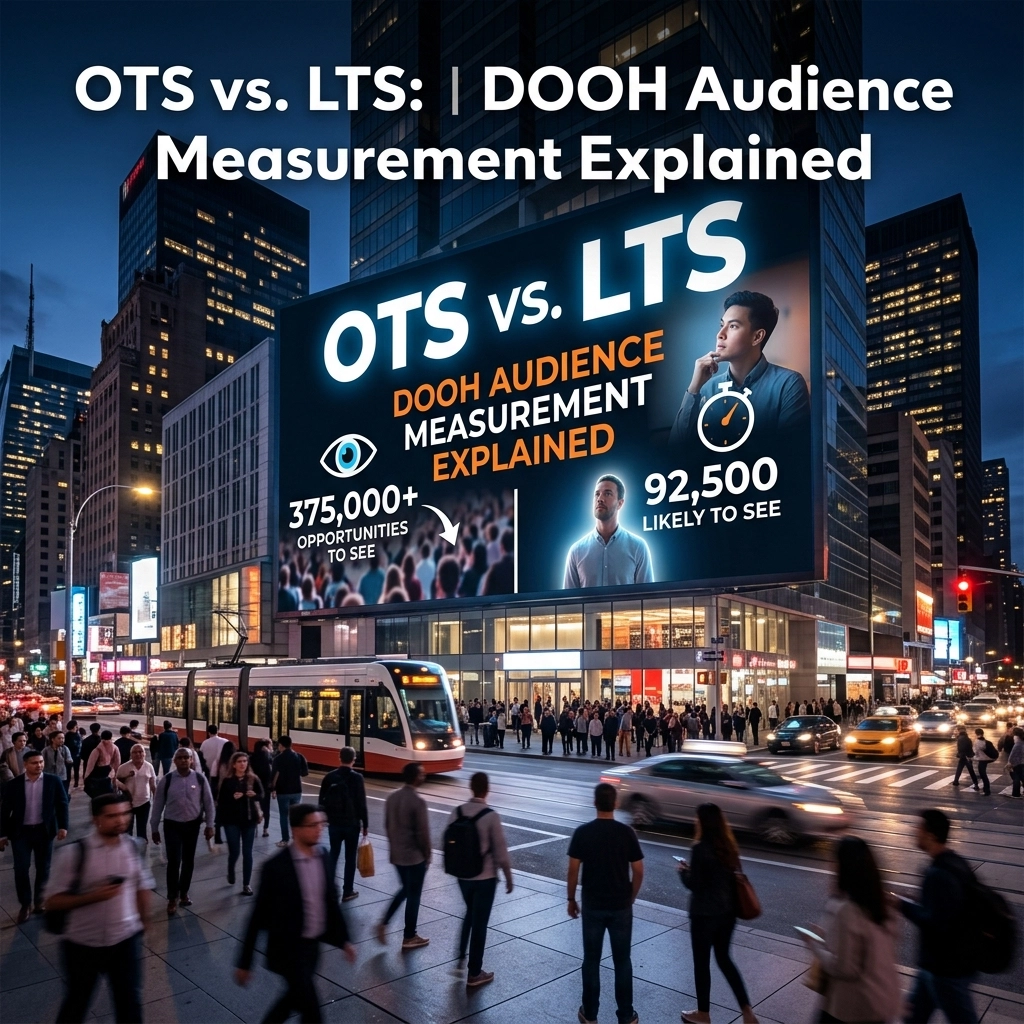
CONTACT: RISHABH S MEHTA, FOUNDER & CEO | LOCAD PTE LTD | SECTOR 6 TECHNOLOGIES LLPSTATUS: SCHEDULED FOR RELEASE [2026-04-03 10:00 AM]OBJECTIVE: TECHNICAL DIFFERENTIATION OF OTS VS. LTS IN PROGRAMMATIC DOOH ENVIRONMENTS 1.0 CORE METRIC ARCHITECTURE: OTS VS. LTS SYSTEM STATUS: [DATA SYNCING…] Audience measurement in Digital Out-of-Home (DOOH) utilizes two primary performance indicators to determine reach and targeting efficiency. The transition from broad traffic counts to refined visibility metrics is essential for ROI calculation and consumer engagement analysis. 1.1 OTS (OPPORTUNITY TO SEE) Definition: Gross potential exposure within a defined visibility zone. Metric Basis: Traffic intensity (Pedestrian + Vehicular). Calculation: Total headcount passing a specific coordinate regardless of orientation. Utility: Media planning, cross-channel budget allocation, gross reach estimation. Current Industry Status: Standardized across Global OOH Audit boards. 1.2 LTS (LIKELIHOOD TO SEE) Definition: Refined visibility probability based on environmental and behavioral variables. Metric Basis: Eye-tracking data, viewing angles, distance, and dwell time. Calculation: OTS x Visibility Adjustment Factor (VAF). Utility: Precise targeting, ROI optimization, performance-based billing. Current Industry Status: Emerging standard for high-accuracy programmatic DOOH. 2.0 OTS: POTENTIAL EXPOSURE PARAMETERS [LOADING MODULE: TRAFFIC INTENSITY ANALYSIS…] OTS represents the top-of-funnel reach metric for OOH assets. It functions as a quantitative count of all individuals with the physical possibility of encountering the advertisement. 2.1 VISIBILITY ZONE MAPPING Primary Zone: 0–50 meters (High impact). Secondary Zone: 50–150 meters (Moderate impact). Peripheral Zone: 150+ meters (Low impact). 2.2 DATA INPUT STREAMS Mobile Location Data: Anonymized SDK pings within a geofenced area. Historical Traffic Audits: Government-sanctioned vehicle counts. Sensor Aggregation: IoT-enabled pedestrian counters at transit hubs. 2.3 KEY PERFORMANCE INDICATORS (OTS-SPECIFIC) Gross Impressions: Total count of visual opportunities per play cycle. Frequency Distribution: Average number of times an individual enters the visibility zone. Reach Efficiency: Percentage of unique users reached within a 24-hour cycle. 3.0 LTS: REALISTIC VISIBILITY REFINEMENT [LOADING MODULE: ATTENTION SENSOR DATA…] LTS provides a granular view of consumer engagement by filtering OTS data through physiological and environmental constraints. It eliminates "false positives" (e.g., individuals with their backs to the screen). 3.1 VISIBILITY ADJUSTMENT FACTORS (VAF) Angle of Approach: Parallel (0.1 VAF) vs. Head-on (1.0 VAF). Screen Luminance: Nit levels vs. Ambient light conditions. Obstructive Logic: Buildings, foliage, or transit infrastructure blocking the line of sight. Movement Velocity: High-speed vehicular traffic (Lower LTS) vs. Stationary pedestrian queues (Higher LTS). 3.2 BEHAVIORAL ATTRIBUTES Dwell Time: Seconds spent within the optimal viewing cone. Gaze Duration: Milliseconds of eye-contact detected via anonymous facial detection (where permitted). Distraction Index: Surrounding visual noise levels (e.g., competing screens, high-density signage). 4.0 ROI CALIBRATION AND AUDIENCE MEASUREMENT SYSTEM STATUS: [CALCULATING ROI PROJECTIONS…] The delta between OTS and LTS significantly impacts media pricing and campaign effectiveness. Advertisers prioritizing consumer engagement utilize LTS to justify higher CPMs for premium placements. 4.1 THE CONVERSION FORMULA OTS / 1,000 = Gross CPM LTS / 1,000 = Effective CPM (eCPM) 4.2 PERFORMANCE METRICS (KPI LIST) Engagement Ratio: (LTS / OTS) x 100. Media INR+ Efficiency: Cost per actual viewer vs. cost per passerby. Targeting Precision: Alignment of detected audience demographics with desired campaign profiles. 5.0 LOCAD DATA-DRIVEN APPROACH: INTEGRATED ANALYTICS [LOADING MODULE: LOCAD PROPRIETARY STACK…] LOCAD Pte Ltd. utilizes a multi-layered verification system to provide real-time audience measurement, bridging the gap between theoretical reach and actual visibility. 5.1 REAL-TIME REPORTING TOOLS Dynamic Impression Audits: Live updates on audience movement. Heatmapping: Spatial visualization of high-LTS zones. Inventory Optimization: Shifting ad spend to screens with increasing Engagement Ratios. 5.2 ANALYTICS AND MAP INTEGRATION For detailed spatial analysis and asset performance, the LOCAD dashboard provides a centralized view of both OTS and LTS metrics across regional networks. Reference: LOCAD Analytics and Map Interface 6.0 TECHNICAL JARGON REFERENCE & STANDARDS [STATUS: ADMINISTRATIVE OVERVIEW] Impressions: Total visual opportunities served. Audits: Third-party verification of traffic and screen uptime. Programmatic DOOH (pDOOH): Automated buying and selling of OOH inventory. Media INR+: Value-added metric for Indian market spend optimization. First-Party Data Integration: Correlating OOH exposure with in-store footfall via device IDs. 7.0 DOOH AUDIENCE MEASUREMENT COMPARISON TABLE PARAMETER OTS (OPPORTUNITY TO SEE) LTS (LIKELIHOOD TO SEE) Primary Variable Traffic Volume Viewing Probability Accuracy Level Base Level (Quantitative) High Level (Qualitative) Tech Requirement GPS / Traffic Sensors Eye-Tracking / Geometry Logic ROI Impact Broad Reach Estimation Conversion Probability Visibility Angle Not factored (360°) Factor-Dependent (Cone-specific) Standard Use Case Brand Awareness Performance Marketing 8.0 STRATEGIC IMPLEMENTATION CHECKLIST SYSTEM STATUS: [READY FOR DEPLOYMENT] Define Objective: High Reach (OTS Priority) or High Engagement (LTS Priority). Site Audit: Assess physical obstructions and viewing angles of selected inventory. Data Sync: Integrate mobile location data with screen-level sensor logs. Optimization: Use LOCAD real-time analytics to reallocate budget to high-LTS slots. Reporting: Generate post-campaign analysis comparing OTS impressions vs. LTS engagements. 9.0 ENVIRONMENTAL & TECHNICAL CONSTRAINTS [STATUS: LOGISTICAL DATA FEED] Lighting Conditions: Impact of sunlight on LTS for non-high-nit screens. Crowd Density: High density may increase OTS but decrease LTS due to physical blocking. Screen Height: Elevating screens increases visibility distance (OTS) but may alter the optimal viewing angle (LTS). Refresh Rates: Impact of digital creative rotation on individual viewer retention. 10.0 FINAL LOG: REACH AND TARGETING SYNERGY [SYSTEM SHUTDOWN… DATA SAVED] Efficiency in OOH media planning requires a dual-metric approach. While OTS provides the scale necessary for brand reach, LTS ensures the precision required for consumer engagement and verifiable ROI. LOCAD's data-centric infrastructure prioritizes the transition from potential visibility to actual audience attention. NEXT SCHEDULED REPORT: 2026-04-06 | TOPIC: FIRST-PARTY DATA INTEGRATION ADMINISTRATIVE NOTICE:For further technical documentation on audience measurement algorithms or to access the real-time mapping engine, visit LOCAD Analytics. [END OF DATA STREAM]

Uncategorized

The Power of Hyperlocal: Integrating Mobile Ads with OOH for Maximum Impact

April 29, 2026 jatin No comments yet

SCHEDULED RELEASE: Tuesday, April 7, 2026 | 10:00 AMREPORT STATUS: FINALDATA STREAM: HYPERLOCAL INTEGRATION ENGINE v4.2 1.0 DIGITAL-FIRST MEDIA ORCHESTRATION STATUS: ACTIVE | GLOBAL MODE ENABLED Hyperlocal advertising is no longer just a targeting tactic. In a Digital-1st media environment, it becomes the foundation for connected brand experiences across physical and digital touchpoints. LOCAD positions this integration as more than a workflow between screens—it is an end-to-end, innovation-led media layer that helps brands, agencies, and media owners activate audiences with precision, speed, and contextual relevance across markets. Execution Scope: OOH, DOOH, mobile, planning, monitoring, reporting, and attribution. Coverage Logic: Local relevance with multi-city, multi-market scalability. Operational Objective: Unifying physical presence and digital response into one measurable media ecosystem. 1.1 MARKET IMPACT: REACH, RELEVANCE, SCALE When OOH exposure is reinforced with hyperlocal mobile engagement, campaigns move beyond awareness into action. This combination gives advertisers a smarter way to build visibility, strengthen recall, and drive measurable outcomes while maintaining consistency across fragmented media environments. For global advertisers and agencies, the real value lies in orchestrating this at scale without losing local nuance. Reach Metric: Unified audience delivery across physical and digital channels. Targeting Precision: Location intelligence aligned with movement, intent, and context. Audience Strategy: Behavioral, demographic, and proximity-based activation across markets. 2.0 GLOBAL MEDIA INFRASTRUCTURE: DOOH + MOBILE IN SYNC STATUS: PROCESSING | INNOVATION LAYER ACTIVE Digital billboards remain powerful visual anchors, but their true value emerges when connected to a broader, tech-driven media framework. LOCAD’s Digital-1st approach transforms individual screens into intelligent, responsive media assets that can adapt creative, trigger mobile amplification, and support omnichannel storytelling across regions. The result is not just synchronized media delivery, but a future-ready operating model for modern advertising. 2.1 SYNCHRONIZATION PARAMETERS Trigger A: High footfall density detected via LOCAD Mobile Ad Platform. Response A: Digital billboard creative switches to high-engagement call-to-action (CTA). Trigger B: Individual device enters 200m radius of active DOOH asset. Response B: Mobile display ad served with matching creative and directional guidance. 2.2 STRATEGIC KPI: OTS VS. LTS Opportunity to See (OTS): Total potential audience within the visibility cone of the digital billboard. Likely to See (LTS): Filtered metric accounting for dwell time, viewing angle, and device interaction. Conversion Buffer: 3-minute engagement window post-exposure. 3.0 CONSUMER ENGAGEMENT LOGS STATUS: MONITORING Consumer engagement metrics transition from passive observation to active interaction through hyperlocal integration. Engagement Multiplier: 2.5x higher interaction rates for geofenced mobile ads vs. non-fenced broad targeting. Primary Interaction Modes: QR Code Scanning (Direct Linkage) Tap-to-Map (Navigation to Point of Interest) Mobile Coupon Downloads (In-Store Attribution) Push Notifications (Immediate Proximity Alerts) 3.1 DYNAMIC CONTENT ADAPTATION Creative assets adjust based on the following data inputs: Weather Conditions: Content shifts based on precipitation or temperature. Traffic Patterns: Dwell-time adjustments for high-congestion periods. Time of Day: Dayparting for breakfast, lunch, and dinner peak hours. 4.0 LOCAD DIGITAL-FIRST PLATFORM: CORE MODULES STATUS: OPERATIONAL | END-TO-END SUITE ONLINE The LOCAD platform serves as the intelligence layer powering end-to-end campaign execution for brands, agencies, and media owners. More than a mobile ad engine, it brings together planning, activation, monitoring, reporting, verification, and optimization into one integrated ecosystem. This is where LOCAD stands apart—as a leading tech-driven media company enabling innovation not only in campaign delivery, but also in how media businesses scale, collaborate, and create value globally. 4.1 BRAND INTEGRITY AND PRIVACY PROTOCOLS Trust, transparency, and brand safety remain core to every deployment. LOCAD’s platform architecture is designed to support ambitious digital transformation while respecting privacy, auditability, and global compliance requirements. Privacy Guard: Anonymized Device IDs (MAID) only. No PII (Personally Identifiable Information) storage. Fraud Detection: Real-time filtering of bot traffic and non-human impressions. Contextual Safety: Blacklisting of inappropriate content environments for mobile ad placement. Audit Trail: Immutable logs of ad delivery and placement verification. 4.2 FIRST-PARTY DATA INTEGRATION First-party intelligence helps transform media from broad exposure into meaningful engagement: Loyalty Member Recognition: Triggering special offers to existing customers in proximity. Lapsed User Re-engagement: Targeted mobile prompts for users who have not visited a physical location in >30 days. Cross-Sell Logic: Promoting complementary products based on past purchase history. 5.0 ANALYTICS, SPATIAL INTELLIGENCE, AND GLOBAL VISIBILITY STATUS: DATA FETCHING | DECISION ENGINE LIVE For modern advertisers, analytics is no longer a reporting layer—it is the engine that shapes smarter media decisions. LOCAD combines spatial intelligence, attribution, and campaign visibility to help stakeholders understand not just where media ran, but how it influenced movement, engagement, and business outcomes. This allows global teams to make local decisions with greater confidence, transparency, and speed. Heatmap Generation: Visual density of consumer engagement relative to OOH asset locations. Path-to-Purchase Tracking: Mapping the route from initial billboard exposure to mobile interaction to store entry. Footfall Lift Analysis: Quantitative measurement of store traffic increase directly attributable to integrated campaigns. View detailed spatial reporting via LOCAD Analytics and Maps. 6.0 OPTIMIZATION LOGS: OOH MEDIA PLANNING ERRORS STATUS: ERROR CHECK COMPLETE To ensure maximum ROI, the following planning deficiencies are mitigated through the LOCAD platform: Error 01: Fragmented Silos. Failure to coordinate OOH and mobile buy-cycles. Error 02: Radius Overshoot. Geofences set too wide, diluting relevance and increasing ad spend waste. Error 03: Static Creative. Using the same creative for a 10-foot mobile screen and a 40-foot digital billboard. Error 04: Attribution Gap. Lack of mobile-to-store tracking mechanisms. 7.0 TECHNICAL SPECIFICATIONS: DOOH + MOBILE WORKFLOW LOADING WORKFLOW MODULE… Site Selection: Identification of high-traffic OOH locations based on historical data. Geofence Implementation: Deployment of virtual perimeters around selected sites. Ad Stack Sync: Linking DOOH playlogs with mobile ad server timestamps. Creative Flighting: Sequential messaging (Billboard = Awareness, Mobile = Action). Post-Campaign Audit: Cross-referencing DOOH impressions with mobile click-throughs and footfall data. 7.1 METRIC BENCHMARKS (AVERAGE) CTR (Mobile Hyperlocal): 0.8% – 1.2% Brand Recall Lift: +15% vs. OOH-only Secondary Action Rate: 12% (In-store visits or website searches) Media INR+: Optimized cost-per-reach via high-efficiency targeting. 8.0 SYSTEM SUMMARY: STRATEGIC RECAP STATUS: COMPLETED | VISION MODE CONFIRMED The integration of mobile advertising with OOH and DOOH is no longer simply

Uncategorized

From Traditional to Tech-Driven: How AI Verification is Boosting OOH Media Owner Revenue

April 8, 2026 jatin No comments yet

CONTACT GLOBAL DEPLOYMENT: LOCAD.NETINQUIRY STATUS: PRIORITY 1SYSTEM INITIALIZATION: COMPLETED SYSTEM STATUS: MODERNIZING OOH MEDIA OWNER INFRASTRUCTURE Current outdoor advertising ecosystem: Transitional. Traditional OOH media owners managing premium physical assets. Digital reporting expectations: Rising. Verification requirements: Real-time. Revenue upside: Directly linked to smarter operations, stronger proof, better client confidence. LOCAD Pte Ltd. | Sector 6 Technologies LLP positioning: Digital-1st technology partner for media owners, brands, and agencies. Scope: Monetization enablement, AI verification, inventory intelligence, operational efficiency. Objective: Bridge traditional OOH assets with modern DOOH expectations. MODULE 1: PROOF OF POSTING MODERNIZATION AND FASTER CLIENT REPORTING Status: LOADING DATA STREAMS… Traditional site operations. Manual field reporting. Delayed proof cycles. Client servicing pressure. Revenue realization gaps. Premium inventory valuation limited when reporting remains offline or fragmented. KPI Indicator: Reporting latency compression. Verification Parameter: GPS-stamped image records. Metric: Faster issue detection. Faster campaign compliance. Faster billing confidence. Digital-1st enablement: Real-time API integration. LOCAD delivers AI-powered proof of posting, timestamp validation, and site-level confirmation. Result: stronger service credibility, reduced manual dependencies, higher-value inventory positioning for media owners. MODULE 2: SMARTER AUDIENCE DATA FOR HIGHER ASSET VALUATION Metric: Opportunity to See (OTS) + Verified Audience Intelligence Premium media inventory requires premium data. Static traffic estimates create valuation ceilings. Dynamic measurement creates stronger sales narratives, better planning outcomes, and improved rate justification. Data Points Tracked: Device ID counts (Anonymized). Dwell time analytics. LTS (Likelihood to See) calibration. Real-time footfall via Analytics and Map interfaces. LOCAD Intelligence Layer: IoT sensor integration for dynamic audience density. Media INR+ calculations based on verified reach. AI-driven filtering for cleaner movement analytics. Result set: stronger media owner pitch, better inventory packaging, improved agency trust, increased monetization potential across traditional and digital screens. MODULE 3: PROGRAMMATIC DOOH READINESS AND PLAYLOG CONFIDENCE SYSTEM STATUS: REVENUE EXPANSION ENABLED Programmatic DOOH demand increasing. Buyer expectations shifting toward reconciled logs, uptime visibility, and measurable delivery. Traditional media owners require infrastructure that supports these expectations without operational overload. Operational Requirements for pDOOH Readiness: Reliable uptime reporting. Timestamped spot-level logs. Ad-server reconciliation support. Brightness and power-status visibility. Campaign delivery consistency across trading windows. LOCAD functions as the technology layer that helps media owners meet digital buying standards. Our AI verification framework supports every ad play with auditable records, improving buyer confidence and enabling inventory participation in higher-value, data-led transactions. MODULE 4: HYPERLOCAL ANALYTICS, MAPPING, AND SELLABLE CONTEXT Location Intelligence: ACTIVE OOH asset value depends on spatial relevance. Media owners with live, map-based analytics gain stronger planning conversations, tighter market packaging, and better alignment with brand performance requirements. Data Requirements for Modern Media Sales: Heatmaps: Real-time concentration of target demographics. Geofencing: Integration with mobile retargeting streams. POI Proximity: Distance metrics from billboards to retail outlets. Media INR+: Value-added reach per location. LOCAD provides granular, site-level analytics through a live map-based analytics dashboard. Result: better storytelling for sales teams, clearer value demonstration for clients, stronger positioning against digital alternatives. MODULE 5: AI VISION VERIFICATION AS AN OPERATIONAL UPGRADE Compliance Engine: ACTIVE Manual photo proofing creates operational drag. AI vision verification creates scalable compliance, stronger documentation, and more dependable campaign evidence for clients and agencies. Operational Value Drivers: Faster campaign proof collection. Reduced risk of incomplete visual records. Better visibility into obstruction or screen-quality issues. More consistent reporting standards across locations. LOCAD AI-Vision Capabilities: Image Analysis: Automated detection of campaign creative on-screen. Obstruction Detection: AI identifies trees, scaffolding, or neighboring construction blocking visibility. Illumination Audit: Verification of night-time visibility and backlight functionality. Time-Stamp Cryptography: Ensuring metadata cannot be altered. THE LOCAD ADVANTAGE: DIGITAL-1ST MEDIA OWNER ARCHITECTURE LOCAD is a technology partner built to help media owners upgrade from legacy workflows to scalable, revenue-oriented operations. Our ecosystem connects physical OOH assets with digital-grade accountability, reporting, and monetization readiness. Product Modules: PLANO: Advanced OOH planning engine utilizing multi-layered data. LOCAUDIT / LOCAUDIT PRO: AI-powered proof of posting, monitoring, and reporting for OOH and beyond. Programmatic DOOH Platform & CMS: Infrastructure for content control, digital delivery, and programmatic monetization. Global Reach: Deployment capabilities in Tier 1, 2, and 3 markets across Asia, Europe, and North America. Performance Indicators (Target vs. Achieved): Verification Speed: 10x faster than manual audits. Operational Efficiency: 40% reduction in manual oversight requirements. Revenue Readiness: Stronger auditable delivery framework for premium pricing and repeat business. UPGRADE CHECKLIST: IS YOUR INVENTORY READY FOR DIGITAL-1ST BUYERS? Feature Traditional OOH Workflow LOCAD-Enabled Media Owner Proof of Posting 7-14 Day PDF Real-time AI Dashboard Audience Data Static/Historical IoT/Real-time Dynamic Verification Manual/Self-Reported AI-Assisted, Auditable Mapping Static Images Interactive Analytics Map ROI Calculation Estimated Data-Validated Monetization Readiness Limited to Traditional Sales Traditional + Programmatic + Data-Led Premium Positioning STATUS: REVENUE UPGRADE RECOMMENDED CONCLUSION: THE FUTURE OF OOH MEDIA OWNER GROWTH Outdoor advertising is entering a new operating model. Client expectations: digital-grade proof, faster reporting, sharper analytics, measurable delivery. Traditional media owners with strong assets now require equally strong technology layers. AI verification, intelligent monitoring, and map-based analytics are not replacements for media owners. They are multiplier systems. Better proof. Better trust. Better pricing power. Better retention. LOCAD Pte Ltd. | Sector 6 Technologies LLP remains committed to helping media owners modernize operations, strengthen client servicing, and unlock higher asset value through Digital-1st infrastructure. PROCESS COMPLETE.TRANSITION TO DIGITAL-1ST MONETIZATION: REQUEST ACCESS KEYWORD RECONCILIATION: Proof of Posting: Verified via AI Vision. Outdoor Advertising Analytics: Delivered through PLANO and LOCAUDIT. Artificial Intelligence: Core engine for verification, monitoring, and operational scale. ROI: Strengthened through better delivery proof and higher inventory confidence. Media INR+: Enhanced valuation metrics for smarter media owner monetization.

Search

Categories

  • Business (2)
  • Guides (2)
  • Insights (2)
  • Marketing (2)
  • ooh (1)
  • Software (2)
  • Technology (2)
  • Uncategorized (6)

Recent posts

  • The End of ‘Ghost’ Billboards: Why LOCAUDIT AI is the World’s Smartest Site Auditor for OOH and Beyond
  • The Power of Hyperlocal: Integrating Mobile Ads with OOH for Maximum Impact
  • OTS vs. LTS: DOOH Audience Measurement Explained

Tags

Creative Enterprise Internet Mobile Popular Startup

Our beautiful designs open the door to a realm of limitless possibilities.

Features
  • Page builder
  • Theme options
  • Theme builder
  • Template library
Resources
  • Support center
  • Documentation
  • Community
  • Hosting
Company
  • About us
  • Careers
    Hiring
  • Press
  • Partners
Get in touch
  • hello@company.com

© Sierra WordPress Theme. All Rights Reserved.

  • Terms & Conditions
  • Privacy Policy